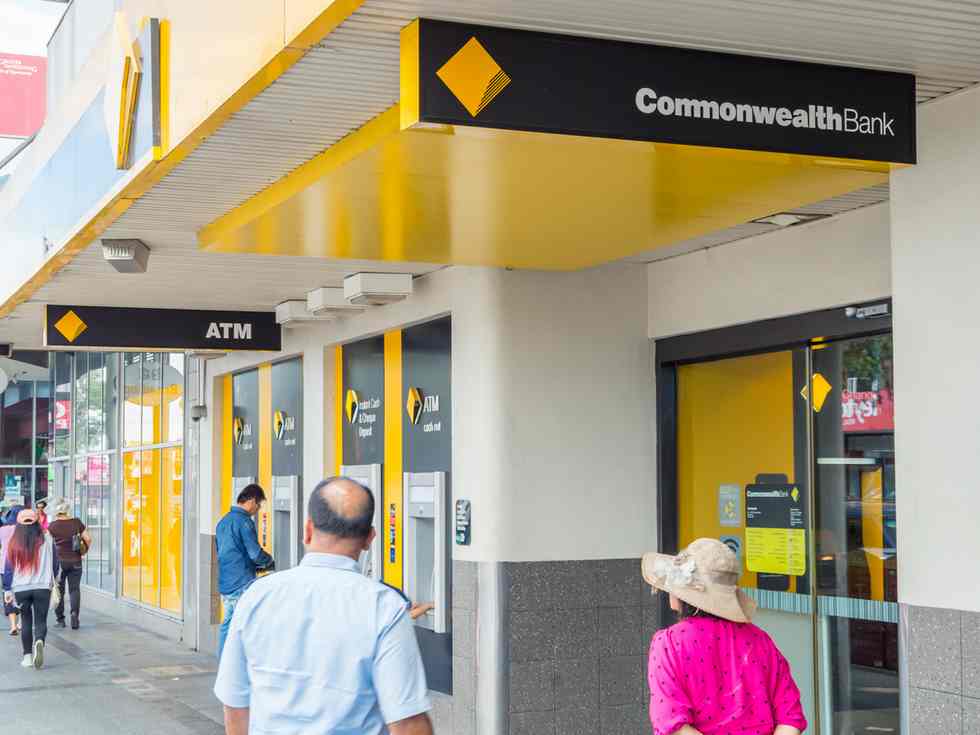
With the rising curiosity in on-line banking companies, significantly in a post-Banking Royal Fee Australia, it will not be shocking to be taught that the variety of ATMs and branches is shrinking.
There are nearly 10 per cent fewer ATMs in main cities throughout Australia within the 12 months to June 2019, in line with analysis from the Australian Prudential Regulation Authority (APRA). That’s 1,079 fewer ATMs in Australia now than a 12 months in the past.
The most important share drops had been in South Australia (-10.6 per cent), adopted by Western Australia (-9.9 per cent).
Additional, financial institution branches have additionally shrunk nationally by 5.3 per cent in the identical time-frame. There are practically 300 fewer branches now than a 12 months in the past – the vast majority of which have left the main cities.
Which prospects are lacking out?
Westpac prospects noticed the most important lower in ATMs, in line with APRA knowledge. This was adopted by Commonwealth Financial institution and Cuscal Restricted (which accomplice with establishments Financial institution Australia and AMP).
The massive 4 banks topped the checklist of establishments which shut down the best variety of branches. Commonwealth Financial institution got here out on high, with 67 branches closed throughout Australia. This was adopted by Westpac (59), ANZ (53) and NAB (32).
Greatest drops in ATMs – June 2018-2019
|
Establishment Identify |
Distinction 2018-2019 |
|
Westpac |
-442 |
|
CBA |
-231 |
|
Cuscal Restricted |
-134 |
|
NAB |
-108 |
|
Bendigo and Adelaide |
-79 |
|
ANZ |
-31 |
Supply: APRA ADI factors of presence database, June 2019
Greatest drops in branches – June 2018-2019
|
Establishment Identify |
Distinction 2018-2019 |
|
CBA |
-67 |
|
Westpac |
-59 |
|
ANZ |
-53 |
|
NAB |
-32 |
Supply: APRA ADI factors of presence database, June 2019
The rise of digital banking
For those who desire face-to-face customer support, don’t despair. There are nonetheless 83 banks within the RateCity database who’ve branches, versus 7 that are on-line solely.
However digital banking is nothing to be sniffed at.
On-line establishments in Australia embrace large names like ING and UBank. Neobanks have additionally entered the area. Together with, Up, Xinja and 86 400.
On-line establishments differ to conventional banks in just a few methods, however are nonetheless licensed to take deposits and are backed by authorities ensures. Their enchantment lies within the comfort of easy-to-use on-line banking.
Neobanks, for instance, declare their benefit is that they don’t have any legacy expertise, and might present quicker, smarter and extra streamlined banking. In a current interview with The Australian, neobank 86 400’s CEO, Rob Bell, claimed their prospects can “take part underneath 120 seconds”, and customers can management all their financial institution accounts by way of their app.
“For those who take a look at what drawback we’re making an attempt to resolve, you may say that’s belief for instance, but it surely runs a lot deeper than that,” mentioned Mr Bell.
“All of the analysis we’ve accomplished says cash has turn into tough to handle and other people don’t really feel in management anymore. We need to have all of your accounts in a single place, and proactively assist Australians make smarter selections.”
Will they be a risk to the massive 4 banks? Time will inform. But when the closure of ATMs and branches is any indication, there’s a rising shift away from brick and mortar banking.
There are some aggressive ongoing financial savings account charges on supply from these on-line platforms above 2 per cent. In response to RateCity figures, the present common ongoing max financial savings charge is 0.97 per cent.
Highest conditional financial savings charges from on-line suppliers
|
Firm |
Product |
Max Charge |
Base Charge |
Situation |
|
86 400 |
Save Account |
2.25% |
0.40% |
Deposit $1000+ every month. Obtainable on balances as much as $100k |
|
Up |
Saver |
2.25% |
0.50% |
Obtainable on balances as much as $50k. Make 5 or extra profitable card purchases per thirty days out of your On a regular basis Account |
|
Ubank |
USaver with Extremely |
2.10% |
1.04% |
Hyperlink Usaver to Extremely Transaction Account, deposit not less than $200 per thirty days and preserve a complete steadiness of not more than $200k |